A dairy producer’s guide to leveraging beef on dairy for climate-smart incentives
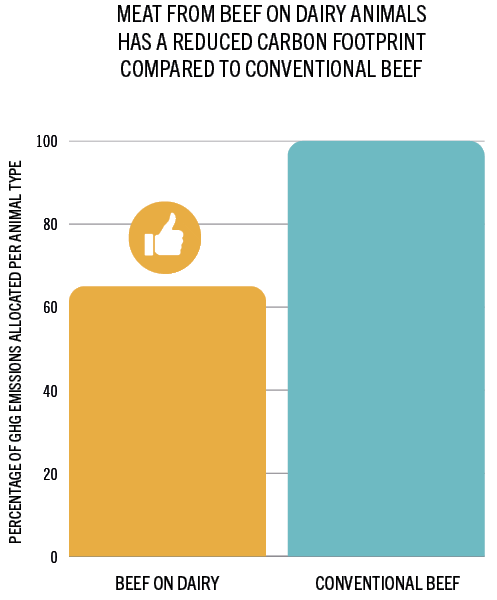
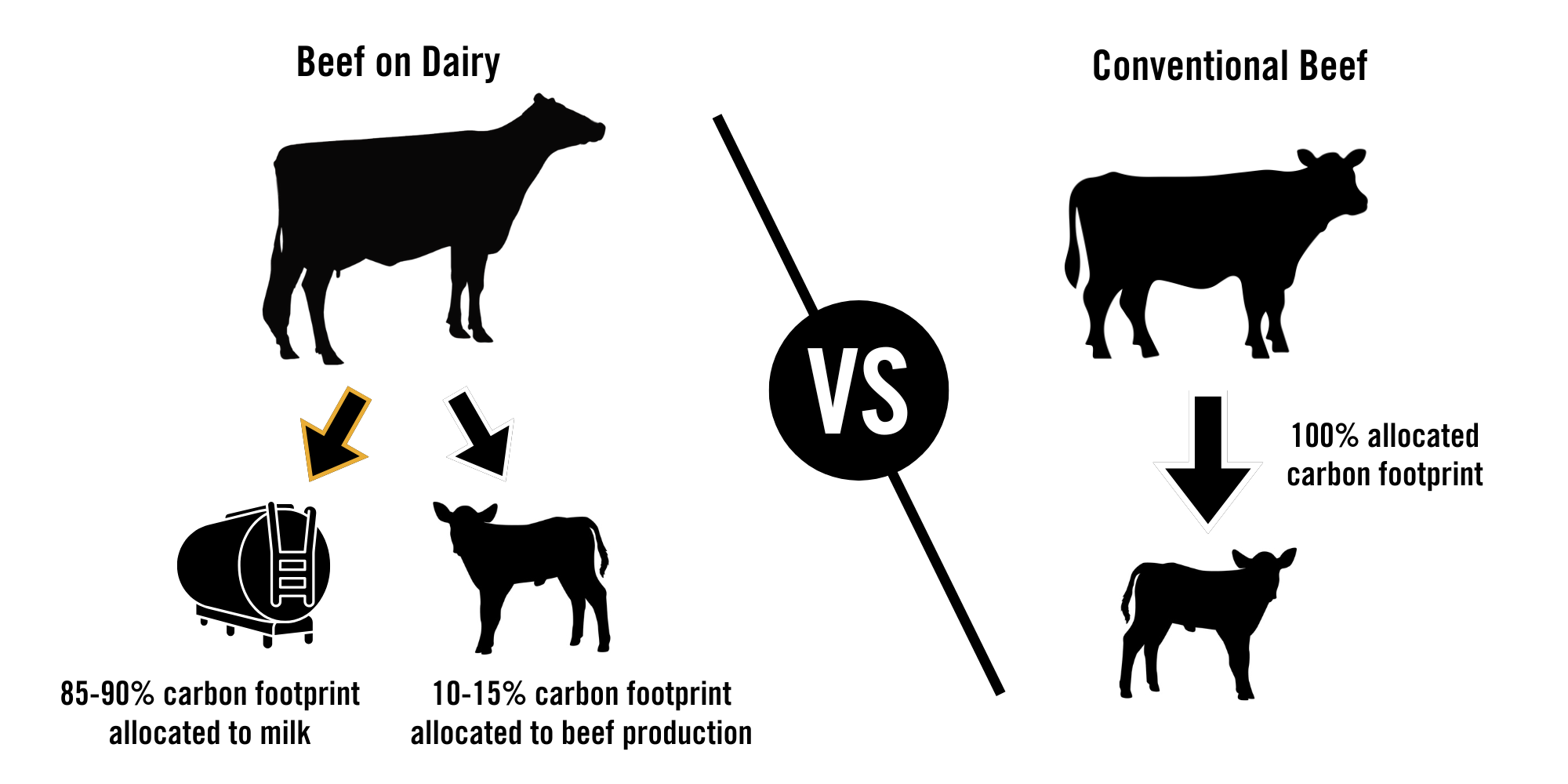
In life cycle assessments, when an animal (dairy cow) produces more than one product (meat and milk), its total greenhouse gas (GHG) emissions are allocated between the two products. A dairy cow’s emissions are largely assigned to milk production and so the footprint of producing a beef-cross calf is relatively small. I like the term “dual-purpose dams.” Whereas in a traditional beef system, all GHG emissions from cow-calf to finishing are fully assigned to the meat, resulting in a higher per-pound footprint. Beef on dairy comes from a dual-purpose system where 85-90% of their emissions are assigned to milk, reducing the share that beef carries to 10-15%. Even as the market value of beef on dairy calves is rising, many dairy producers and feeders may be missing a critical opportunity — the carbon value.
Here’s why the supply chain likes beef on dairy calves
There are known benefits of beef on dairy calves regarding the supply chain and these factors also contribute to a lower carbon footprint.
- High feed efficiency and lower total cost of gain
- Higher volumes of well-marbled and high-grade beef
- Supply chain value of uniform carcasses and predictable performance
- Year-round supply of beef calves
Beef on dairy animals are valued in the supply chain due to their year-around availability and carcass merits. In well managed feedyards, they are achieving more than 60% Prime and Choice, no different than conventional beef. Dressing percentages are good and carcasses are larger, resulting in better yield grades. Overall, the beef on dairy animals are highly valued by feedyards and packers. This value is here to stay; it won’t be displaced even if the conventional beef supply increases.
Take steps today to position your dairy to capitalize on future opportunities
Beef on dairy animals should be viewed as emissions assets. With a smaller carbon footprint thanks to emissions allocation and genetic selection and performance, these crossbreds present a valuable opportunity for the beef supply chain, particularly for feeders and finishers looking to capitalize on growing demand for Reduced Carbon Verified Beef. As market signals increasingly favor low-footprint, high-performing cattle, pull-through demand will continue to grow. That means greater value potential not just for feedyards, but for dairy producers who are positioned to meet this demand.
To fully realize that value, producers should ensure their programs support traceability and data integrity — laying the foundation for access to sustainability-linked premiums and carbon credits. Traceability is the foundation of Select Sires’ ProfitSOURCE® program. Without traceability, even the highest-performing calves risk getting lost in the commodity stream leaving carbon value on the table.
Bottom Line: Your beef on dairy calves are worth more than even the current market reflects. Low Carbon Technologies is currently crafting opportunities for the footprint value to be measured and monetized as product premiums and carbon credits. Consider LCT your partner in creating solutions so you can leverage climate-smart opportunities.