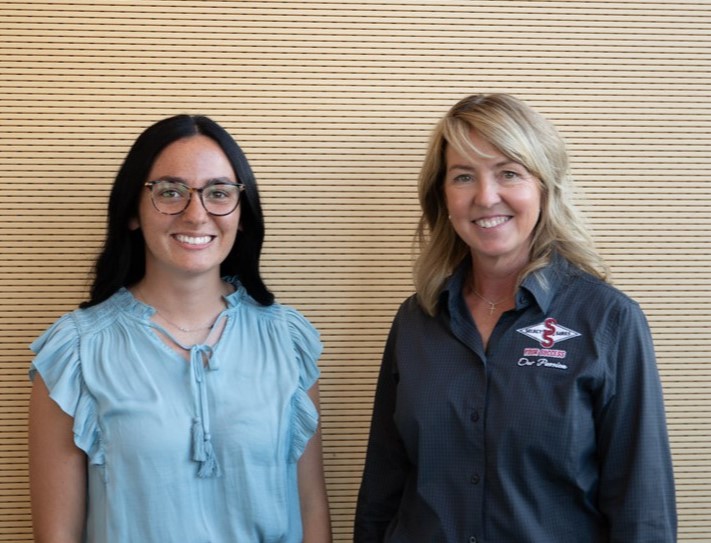
Each year, two $1,250 scholarships are awarded, one to an undergraduate student and one to a graduate student. The scholarships were established to encourage young men and women interested in beef improvement to pursue those interests, as Wallace did, with dedication and passion.
Barta was selected as the 2026 undergraduate scholarship recipient. A junior at the University of Idaho majoring in agricultural science, communication and leadership with a minor in animal science, she has extensive leadership, research and industry involvement. Her activities include serving as a College of Agricultural and Life Sciences ambassador, newsletter and magazine editor, Block and Bridle secretary, and student Idaho Cattle Association historian.
Barta has conducted undergraduate research in both meat science and agricultural communications and has served as a Washington Cattlewomen Beef Ambassador, livestock clinician and youth mentor. Following graduation, Barta plans to pursue graduate studies in animal genetics and work to advance genetic improvement and producer education within the beef industry.
“The future is bright for our industry, and I am eager to play a meaningful role in its continued advancement,” Barta said.
DeVoe (pictured) was selected as the 2026 graduate scholarship recipient. She is pursuing a master’s degree in animal breeding and genetics at Kansas State University, where her research focuses on incorporating methane phenotypes into genetic selection strategies to improve efficiency in beef cattle production. A former president of the National Junior Red Angus Association, DeVoe has demonstrated a commitment to both leadership and research throughout her academic career.
Her experience includes work with the Beef Cattle Institute at K-State, research programs through the U.S. Department of Agriculture, and producer-focused research initiatives aimed at improving the sustainability and profitability of beef production systems. She plans to continue advancing science-based beef genetic improvement and producer education throughout her career.
“The Beef Improvement Federation has long stood as a leader in promoting sound science and performance-based selection, and I am committed to carrying that mission forward,” DeVoe said.
The Roy A. Wallace Beef Improvement Federation Memorial Fund was established by Select Sires to honor its namesake.
Wallace, who worked for Select Sires for 40 years, served as vice president of beef programs and devoted his career to improving beef cattle. He became involved with BIF in its infancy and was the only person to attend its first 40 conventions.
Wallace was passionate about the organization’s mission—bringing together purebred and commercial cattle breeders, academia and breed associations, all committed to improving beef cattle. He was honored with both the BIF Pioneer and Continuing Service awards and co-authored the organization’s 25-year history, Ideas Into Action.
Selection criteria for the scholarship awards included demonstrated commitment and service to the beef cattle industry, academic performance, personal character, and a passion for beef breeding, genetics and reproduction.
Approximately 400 beef producers, academia and industry representatives attended the organization’s 58th annual research symposium and convention in Boise. BIF’s mission is to advance the industry by promoting greater acceptance of beef cattle performance evaluation.
For more information about this year’s symposium—including
additional award winners and coverage of meetings and tours—visit BIFSymposium.com.