This progress has been made possible through the National Cooperator Database, stewarded by the Council on Dairy Cattle Breeding (CDCB). This cumulative database of phenotypes (cow performance records) and genotypes, connected through pedigrees, now includes records from over 100 million individuals and more than 12 million genotypes of dairy animals around the world. More information creates more opportunity, but it also creates more decisions. With dozens of traits to balance, genetic selection has become increasingly complex.
As our ability to measure and analyze data has expanded, so has our understanding of what drives profitability, and the bottom line that a successful cow must do far more than produce milk. Over the past several decades, trait development has focused on longevity, health, and overall fitness. Since the 1990s, indicator traits such as Productive Life (PL) and Somatic Cell Score (SCS) have helped improve genetic resistance to disease, including mastitis. More recently, direct evaluations such as the mastitis resistance evaluation introduced by CDCB in 2018 have made selection for these traits more precise and effective.
With this broader set of traits, each with its own genetic parameters, genetic selection has become multifaceted. Selection indexes simplify this process by combining multiple traits into a single value, allowing producers to make balanced genetic progress in several areas at once. While most widely used indexes strongly emphasize fat and protein production, they differ in how they prioritize health, fertility, and longevity.
At the same time, herd dynamics have evolved. The increased use of sexed semen and beef semen means most herds have tighter heifer inventories and reduced turnover in the cow herd, resulting in an increased average age of cows. This trend places greater importance on cows that can remain healthy, fertile, and productive into later lactations.
Recognizing this shift, Select Sires developed the Herd Health Profit Dollars® (HHP$®) index to more directly target the traits that influence a cow’s ability to stay in the herd. Rather than relying heavily on later-life outcomes, such as overall Productive Life (PL), HHP$ emphasizes fertility and mastitis resistance traits that can be measured earlier and are repeated across lactations over an animal’s lifetime.
The advantage of this approach becomes clear when comparing the trait profiles of top-ranked sires across major selection indexes. When evaluating the top 100 Holstein A.I. sires from April 2026 genetic evaluations for various indexes, the leading HHP$ sires remain competitive for Combined Fat and Protein (CFP) production and differentiate themselves through superior performance in health and fitness traits.
Top HHP$ sires offer a strong combination of mastitis resistance, improved somatic cell score, and daughter fertility — all traits that contribute to cows remaining productive and profitable longer, while maintaining moderate body size.
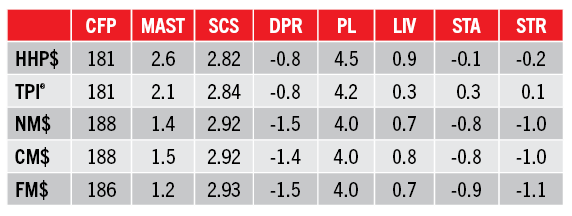
Select Sires’ commitment to mastitis resistance is even more evident when focusing on that single trait. Industry wide, across more than 5,400 active and genomic Holstein sires, the distribution of CDCB Mastitis Resistance (MAST) PTAs during the April 2026 evaluations ranged from -6.1 to +5.8, with an average of +1.2. When looking across the 18 organizations with at least 70 sires enrolled, the Accelerated Genetics, Select Sires and GenerVations brands rank first, third and fourth, respectively, for their sires’ average MAST PTA.
While PTA comparisons provide valuable insight into genetic potential, what ultimately matters is how those differences translate into real cow performance. Expanding upon the analysis previously referenced by Chuck Sattler, Senior Vice President of Genetic Programs and Research, in the Winter 2026 issue of Selections, animals were evaluated for key indicators of lifetime performance. One of the strongest pieces of evidence that HHP$ works comes from looking at the percentage of cows with a mastitis event in the first 150 days in milk during their third or greater lactation. (Figure 1)
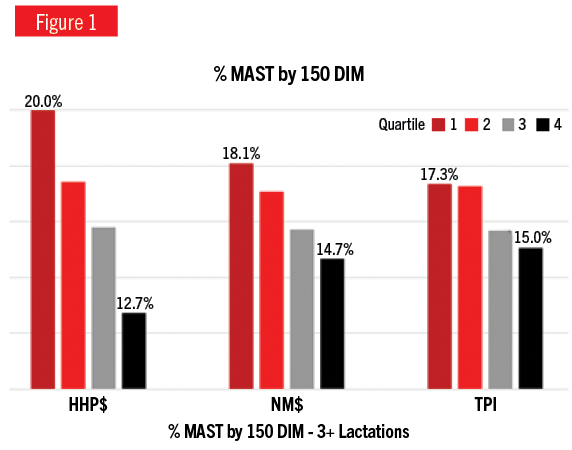
The results clearly demonstrate the impact of selection strategy on cow health outcomes.
Across all three indexes, mastitis incidence decreases from the worst (Q1) to the best (Q4) quartile. However, the magnitude of improvement is greatest for HHP$, with the top quartile of HHP$ animals outperforming the best animals identified by other indexes for MAST. These cows achieved this level of disease resistance without sacrificing lifetime fat and protein production, while also having the most lifetime days in milk and the highest proportion of cows reaching their fourth lactation.
These results highlight an important takeaway: selection decisions that place greater emphasis on health and fitness traits translate into measurable improvements in cow performance. By prioritizing traits that influence longevity and disease resistance, producers can build herds that are not only productive, but also more sustainable, profitable, and resilient over time.
Read Chuck Sattler's article, Success Starts with Smart Selection, for further insights.